
Many people struggle preventing neck and back pain from computer use. We spend long hours sitting at a desk, and it’s easy to forget how important movement and posture are during the workday. Over time, prolonged sitting can lead to neck pain, mid-back tension, headaches, and lower back discomfort.
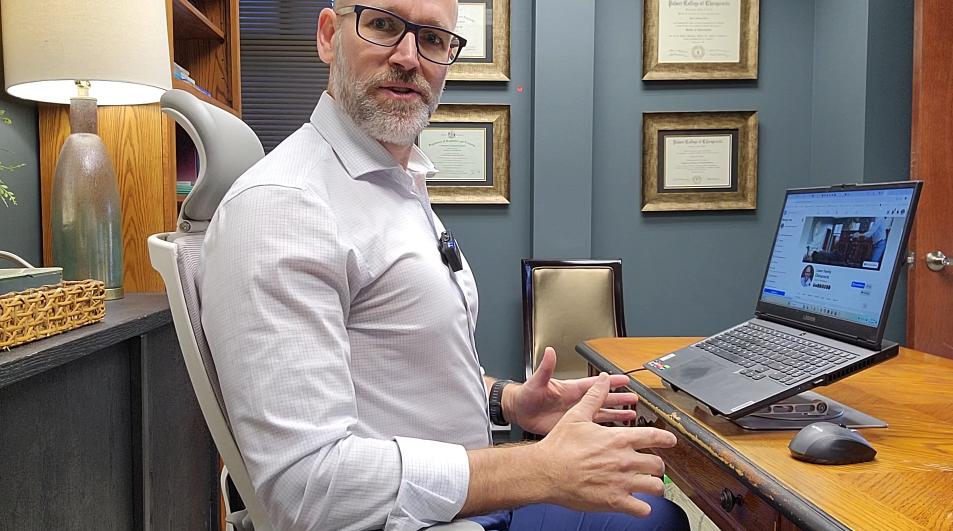
That’s why I’ve created a new video: “Desk exercises for neck and back pain” demonstrating four simple workstation exercises you can do right at your desk. These movements are designed to help:
- Relieve muscle tension
- Improve posture
- Reduce stress on the spine
- Prevent aches and pains from long hours at the computer
Best of all, if you want to prevent neck and back pain from computer use, these activities require no special equipment and take just a few minutes.
Why Desk Exercises Matter
Desk exercises for neck and back pain help by improving circulation, restoring spinal movement, and counteracting the poor posture that develops from prolonged sitting.
Even brief movement breaks every couple of hours can make a noticeable difference in how your body feels.
4 Simple Exercises You Can Do at Your Workstation
Here’s a sneak peek at what you’ll learn in the video:
1. The Water Trick
This one surprises people — but it works.
Drink more water while you work.
Frequent bathroom breaks naturally remind you to:
- Stand up
- Walk
- Reset your posture
- Perform your desk exercises
Hydration plus movement is a simple but powerful combination for spinal health.
2. Spinal Extension Exercise
One of my favorite postural exercises.
This movement helps counteract forward head posture and rounded shoulders by:
- Opening the chest
- Reducing strain on the neck
- Relieving mid-back tension
- Helping prevent headaches
It directly targets tissues that commonly become irritated during desk work.
3. Thoracic Lift
When people are told to “sit up straight,” they often do it incorrectly.
The thoracic lift teaches you how to properly stack your spine, engaging the mid-back instead of overusing the neck and lower back. This is how good posture should feel — strong, not forced.
4. The Seat Cushion Secret
You may have seen coworkers sitting on exercise balls — but this mini version works even better.
Using a small seat cushion or wedge:
- Encourages subtle core activation
- Improves pelvic positioning
- Reduces pressure on the lower back
It’s an easy way to improve posture without disrupting your workday.
How Often Should You Do Desk Exercises?
Aim to perform these movements:
- Every 1–2 hours
- For 1–3 minutes at a time
Consistency matters more than duration. Small, frequent movement breaks are far better than one long stretch at the end of the day.
Watch the Video and Follow Along
Ready to get moving?
👉 Click here to watch the video and follow along as I demonstrate each exercise step-by-step. Your back — and your productivity — will thank you.v Also, here is a link so you can see the examples and options for standing desks: https://www.vari.com/desks-and-tables/standing-desks/
Your next step is to understand your computer workstation set up. Check it out here: The perfect workstation set up
Final Thoughts: Build a Healthier Workday
A pain-free day is a productive day. Making these simple exercises part of your daily routine can help protect your spine, improve posture, and reduce work-related discomfort.
If you’re still experiencing neck or back pain despite improving your workstation habits, a chiropractor can help identify underlying posture or mobility issues and guide you toward lasting relief.
Wishing you comfort and wellness,
Dr. Lauer
#WorkstationWellness #DeskExercises #BackPainRelief #PostureFix #WorkstationSetup #HealthyWorkspace #OfficeErgonomics #DeskStretch #PainFreeDesk #RemoteWorkTips
#PreventBackPain #ComputerWorkouts #StretchAtYourDesk #NeckAndShoulderRelief
#StayActiveAtWork