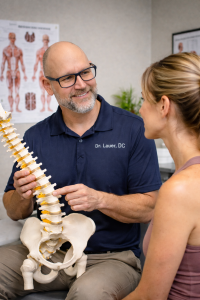
The Hidden Truth About Back and Neck Pain will become clear as we discuss the underlying factors you may not have considered before. In this post, we’ll explore The Hidden Truth About Back and Neck Pain so you can better understand what causes it.
📌 Article At-a-Glance: Non-Traumatic Causes of Back and Neck Pain
- Most people assume back or neck pain must come from a specific injury, but the majority of spinal problems are not caused by trauma.
- Microtrauma—small, repeated stresses on the spine from daily habits like poor posture, prolonged sitting, or phone use—are the true culprits behind most chronic spinal pain.
- Over time, microtrauma leads to joint dysfunction, disc irritation, and nerve stress, often without any noticeable warning signs until the pain suddenly “shows up.”
- Compounding the problem is muscular weakness and imbalance, especially in the core and postural muscles, which leaves the spine vulnerable and unsupported.
- Common examples of spinal microtrauma include:
- Sitting for long periods with poor posture
- Sleeping with inadequate support
- Slouching over phones and laptops
- Repetitive bending, twisting, or lifting at work
- Chiropractic care helps patients adapt better to microtrauma—not just masking the symptoms—by improving spinal alignment, restoring movement, and strengthening support muscles.
- Early intervention and education about posture, movement patterns, and strength training can prevent chronic pain from developing in the first place.
- At Lauer Family Chiropractic, we help patients move beyond pain by correcting underlying dysfunction—so they can move better, feel better, and stay better.
When patients walk into our office complaining of back or neck pain, one of the most common questions we ask is, “When did this start?” More often than not, the answer is something like:
“I think I must have slept wrong.”
“I didn’t do anything—I just bent over to pick up a sock.”
“It started after I went for a walk, but I didn’t twist or fall.”
There’s a persistent myth that back or neck pain always starts with a single traumatic event, some obvious injury like a fall, car accident, or sports mishap. But here’s the truth: most spinal pain doesn’t come from a big moment. It builds silently over time.
This blog explores why most back and neck problems aren’t the result of acute trauma. Instead, they stem from microtrauma—small, repeated stresses to the spine—and from muscular imbalances or weaknesses that leave your spine unsupported. Understanding this concept is key to preventing pain, properly addressing its cause, and improving long-term outcomes.
Common Misconception: “If I’m hurting, I must’ve done something.”
It’s natural to want a clean explanation for pain. When a patient says “I didn’t even do anything,” what they usually mean is, “I don’t remember doing something big that could’ve caused this.”
But pain doesn’t always work like that. Think of it this way:
- A rope frays after years of tension and finally snaps with a tug.
- Teeth slowly decay until pain signals a cavity.
- A weakened structure fails under mild pressure.
- The mighty oak tree can succumb to the relentless forces of the woodpecker.
Back and neck pain often result from long-term, non-traumatic causes—not a single event.
What Is Microtrauma?
Microtrauma refers to tiny, repetitive stresses placed on the body over time. These are not acute injuries. Instead, they come from daily habits that gradually strain the spine and surrounding structures.
Common Sources of Microtrauma:
- Sitting with poor posture at a computer. Visit this link to improve your computer workstation: https://www.drlauer.com/chiropractic-desk-ergonomics-neck-pain-computer/
- Sleeping with inadequate neck support
- Driving long distances with slouched shoulders
- Repetitive lifting or bending at work
- Looking down at phones or tablets for hours
Over time, these stresses wear down the joints, discs, muscles, and ligaments—without causing immediate symptoms.
Muscular Weakness: The Missing Link in Spinal Pain
Another key contributor to back and neck pain is muscular imbalance and weakness.
Your spine is supported by an intricate system of muscles, especially in your core, glutes, and neck. When those muscles are underused or imbalanced:
- Spinal joints bear more weight than they should
- Dysfunctional movement patterns develop
- Discs and nerves become vulnerable to irritation
Factors That Lead to Weakness:
- Sedentary lifestyle
- Poor posture
- Lack of resistance training
- Chronic stress and tension
These conditions often set the stage for injury—even from a simple movement like bending down to tie your shoe.
Why Pain Often Feels Like It Came “Out of Nowhere”
Even though the origin of back or neck pain is often non-traumatic, symptoms can still show up suddenly. That’s because the body often stays silent—until it can’t compensate anymore.
What seems like a “random” tweak or spasm is usually the final straw after months (or years) of microtrauma and poor muscle support.
Example:
Your spine is like a paperclip bent back and forth. It doesn’t snap on the first bend—but it eventually breaks from repeated stress. Here is reasearch discussing this very topic: https://pmc.ncbi.nlm.nih.gov/articles/PMC3489327/
The Real Message Behind Spinal Pain
If your back or neck pain “just started” without a fall or injury, that doesn’t mean it’s minor—or all in your head.
It likely means:
- Your body has reached its limit of tolerance
- There are deeper biomechanical issues at play
- Posture, movement habits, and strength need to be addressed
The Chiropractic Approach to Non-Traumatic Spinal Pain
At Lauer Family Chiropractic, we don’t just focus on relieving symptoms—we focus on identifying the why behind your pain.
Step 1: Structural Evaluation
We assess spinal alignment, posture, joint motion, and stress patterns to find the hidden sources of microtrauma.
Step 2: Chiropractic Adjustments
These restore normal motion to affected spinal joints, reduce inflammation, and alleviate pressure on nerves. They also help reset dysfunctional movement patterns.
Step 3: Muscle Activation & Correction
We design individualized rehab strategies to restore balance to weak or overused muscles. This includes exercises for:
- Core stability
- Scapular retraction
- Glute engagement
- Deep neck flexors
Step 4: Posture & Lifestyle Coaching
We’ll teach you how to adjust your work setup, sleep position, and movement habits to stop microtrauma in its tracks.
Start Healing By Making These Changes Today
Even before your chiropractic visit, here are 5 changes you can make right now:
- Change Positions Often: Don’t sit or stand in one posture for more than 30–45 minutes.
- Improve Your Workspace: Use a chair with lumbar support and raise your screen to eye level.
- Strengthen Your Core: Try planks, bird dogs, and dead bugs for spinal support.
- Stretch Daily: Focus on tight areas like hamstrings, hip flexors, pecs, and upper traps.
- Stay Active: Walk regularly, avoid long periods of inactivity, and vary your movements.
Conclusion: It’s Not About What You Did—It’s About What’s Been Happening Over Time
You don’t need to fall off a ladder or lift a couch to hurt your back or neck. The vast majority of spinal issues we see are from long-term, low-grade stress—not a dramatic injury.
The pain may have started yesterday, but the problem likely started years ago.
At Lauer Family Chiropractic, we’re here to help you uncover and correct those hidden causes of pain—so you can not only feel better, but move better, live better, and stay healthier for the long term.
Let’s find the real reason for your pain.
📞 Call Lauer Family Chiropractic today at 262-446-0220 to schedule your personalized spinal assessment.
We’ll help you break the cycle of pain—starting at its true source.